LED Lighting Explore the Basics of Types, Uses, and Advantages
LED lighting has become a common part of residential, commercial, industrial, and outdoor environments because it combines efficient illumination with flexible design options.
From household fixtures and office panels to streetlights and warehouse systems, LEDs are now used across a wide range of lighting applications.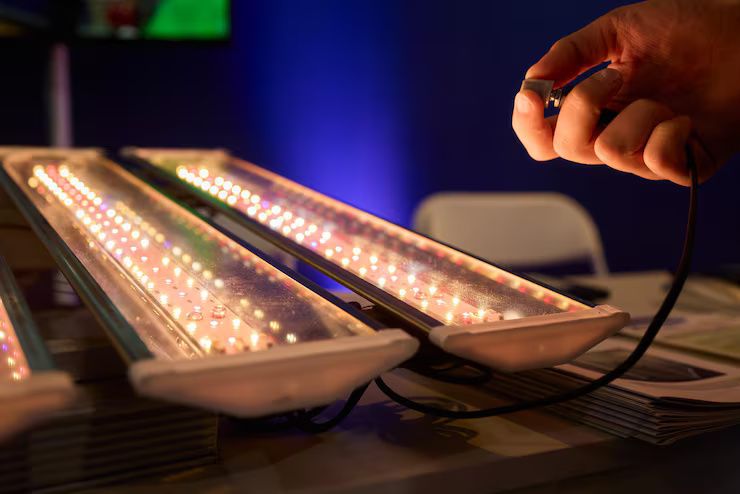
The growing adoption of LED technology is closely connected to improvements in semiconductor design, fixture engineering, controls, and lighting quality. Modern LED systems can support different brightness levels, color temperatures, beam patterns, and control methods, making them suitable for environments with very different requirements.
Understanding the basics of LED lighting makes it easier to distinguish between fixture types, recognize appropriate applications, and evaluate characteristics such as light output, color quality, lifespan, heat management, and controllability. These factors are useful when considering lighting for a specific room, facility, workplace, or outdoor setting.
How LED Lighting Produces Illumination
LED stands for light-emitting diode, a semiconductor device that produces visible light when electrical current passes through it. Unlike traditional incandescent lamps, which create light by heating a filament, LEDs generate light through electroluminescence.
An individual LED is relatively small, so practical lighting products normally use multiple LEDs combined with electrical and optical components. These may include drivers, lenses, reflectors, heat sinks, and control electronics.
The driver is particularly important because it regulates the electrical power supplied to the LEDs. The optical design determines how light is distributed, while thermal management helps prevent excessive heat from affecting component performance.
Common Types of LED Lighting
LED technology can be used in many fixture designs, with each type serving a particular lighting purpose.
LED Bulbs
LED bulbs are designed to fit common lamp and fixture sockets, making them suitable for general illumination in homes, offices, and smaller commercial spaces. They are available in different shapes, wattage equivalents, color temperatures, and brightness levels.
Because they work with familiar socket formats, LED bulbs can provide a straightforward way to transition from older lamp technologies without redesigning an entire lighting installation.
LED Panels
LED panels are widely used in offices, schools, healthcare facilities, and other commercial environments. Their flat construction allows them to distribute light across larger ceiling areas with relatively uniform illumination.
Many panels are designed for suspended ceilings or surface mounting. Their broad light distribution can help reduce harsh shadows and create a more consistent workspace environment.
LED Downlights
LED downlights are recessed or surface-mounted fixtures that direct light downward. They are commonly used in residential rooms, retail environments, hospitality areas, and offices where focused architectural lighting is appropriate.
Different beam angles allow designers to create either concentrated illumination or broader coverage depending on the application.
LED Strip Lighting
LED strips contain closely spaced light-emitting diodes mounted on a flexible circuit. They are useful for accent lighting, architectural detailing, cabinets, displays, signage, and other applications where conventional fixtures may be difficult to position.
Their flexibility makes them particularly suitable for indirect lighting and decorative installations.
LED High-Bay Fixtures
High-bay LED fixtures are designed for locations with high ceilings, including warehouses, manufacturing facilities, distribution centers, and large recreational spaces.
These fixtures are engineered to provide substantial illumination over wide floor areas. Optical distribution is especially important because the fixture must deliver useful light from a significant mounting height.
Understanding Color Temperature and Light Quality
Brightness is not the only characteristic that determines whether a light is suitable for a particular environment. Color temperature and color rendering also influence the visual experience.
Color temperature is generally described using Kelvin values. Lower values typically produce warmer, more yellowish light, while higher values produce cooler, more neutral or bluish-white light.
Warm illumination is often associated with homes, hospitality spaces, and relaxing environments. Cooler light may be preferred in offices, workshops, healthcare settings, and areas where visual concentration is important.
Color rendering indicates how accurately a light source allows objects and surfaces to appear compared with natural or reference illumination. High color-rendering performance can be particularly important in retail displays, art environments, healthcare applications, and precision work.
Where LED Lighting Is Commonly Used
The versatility of LED systems allows them to support many lighting requirements.
In residential environments, LEDs are commonly used for general room illumination, kitchens, bedrooms, bathrooms, outdoor areas, and decorative applications.
Commercial buildings use LED panels, downlights, linear fixtures, and other systems for offices, corridors, retail spaces, restaurants, and public facilities.
Industrial environments often require high-bay fixtures, task lighting, machine-area illumination, and durable systems that can operate under demanding conditions. LEDs are also widely used for warehouses because controlled light distribution can support visibility across large storage areas.
Outdoor applications include street lighting, parking areas, pathways, architectural illumination, sports facilities, and public infrastructure. Outdoor LED fixtures are typically designed with enclosure and environmental protection characteristics suited to their installation conditions.
Key Advantages of LED Lighting
One of the main advantages of LED technology is efficient conversion of electrical energy into light. Compared with older lighting technologies, LEDs can produce useful illumination while generating less unnecessary heat during normal operation.
LED fixtures also have long operational lifetimes when properly designed, installed, and thermally managed. Their solid-state construction means they do not rely on fragile filaments that can break from vibration or physical movement.
Another advantage is controllability. LED systems can be integrated with dimming controls, occupancy sensors, timers, daylight-responsive systems, and centralized building controls.
Other practical advantages include:
- Compact fixture designs
- Directional light distribution
- Rapid switching
- Flexible color temperatures
- Compatibility with automated controls
- Reduced maintenance frequency in suitable applications
These characteristics make LED lighting useful across environments with very different operational requirements.
What Affects LED Performance?
Not every LED product performs in the same way. Fixture design, electrical quality, operating temperature, installation conditions, and driver performance can significantly influence results.
Heat management is especially important. Although LEDs generally produce less waste heat than incandescent lamps, the heat they do generate must be transferred away from the semiconductor and electronic components. Poor thermal management can accelerate degradation and affect long-term performance.
Installation conditions also matter. Fixtures exposed to moisture, dust, vibration, chemicals, or extreme temperatures may require appropriate environmental protection and specialized construction.
Light distribution should be considered alongside lumen output. A fixture with a high total light output may still perform poorly if its beam pattern does not match the area being illuminated.
LED Controls and Smart Lighting
Modern LED systems increasingly incorporate digital controls that allow lighting to respond to occupancy, schedules, daylight conditions, or user preferences.
Occupancy sensors can reduce unnecessary illumination in spaces that are only used intermittently. Daylight-responsive controls can adjust artificial lighting when sufficient natural light is available.
Connected lighting systems can also provide centralized monitoring and control across large facilities. These capabilities are particularly relevant in commercial and industrial buildings where lighting forms part of a broader building management strategy.
Smart controls should be selected according to actual operating requirements. More technology does not automatically produce better lighting if the system is unnecessarily complex for the environment.
Choosing the Right LED Lighting Approach
Selecting LED lighting requires more than comparing brightness figures. The intended activity, room dimensions, mounting height, surface characteristics, operating schedule, and desired visual environment all affect fixture selection.
For example, a warehouse may prioritize high mounting performance and broad, controlled distribution, while a residential living area may require warmer illumination and more localized fixtures.
It is also useful to consider color rendering, glare, dimming compatibility, environmental conditions, and maintenance access. A well-designed lighting system balances these factors rather than optimizing for a single specification.
Frequently Asked Questions
What makes LED lighting different from traditional lighting?
LED lighting uses semiconductor devices to generate light rather than heating a filament. This enables compact fixture designs, rapid switching, directional illumination, and high efficiency.
What are the main types of LED lighting?
Common types include LED bulbs, panels, downlights, strip lights, high-bay fixtures, linear fixtures, floodlights, and outdoor luminaires. Each is designed for different installation and illumination requirements.
Is LED lighting suitable for industrial environments?
Yes. LED systems are widely used in warehouses, factories, workshops, and other industrial spaces. High-bay and specialized fixtures can provide controlled illumination for large areas and demanding operating conditions.
Why does color temperature matter?
Color temperature affects the visual appearance and atmosphere created by a lighting system. Warmer light is often used for comfortable, relaxed environments, while cooler light is commonly selected for work-oriented spaces.
Do LED lights require special controls?
Not always. Basic LED fixtures can operate with standard switching, while compatible systems can also support dimming, occupancy sensing, scheduling, and automated building controls.
Conclusion
LED lighting has evolved into a flexible technology capable of supporting a broad range of indoor and outdoor environments. Its applications span residential spaces, offices, industrial facilities, warehouses, public infrastructure, and architectural projects, with fixture designs adapted to different illumination requirements.
Understanding LED types, color characteristics, light distribution, thermal performance, controls, and operating conditions provides a stronger foundation for selecting an appropriate lighting approach. The most effective system is not simply the brightest option but one that delivers suitable visual performance, control, reliability, and efficiency for the environment in which it operates.

Related Post...

Hazardous Waste Management Companies: Explore Compliance and Operations
Updated: September 15, 2026
Read More
Heavy Industrial Packaging and Baling Systems: Explore Equipment and Applications
Updated: October 01, 2026
Read More
heavy industrial crane rental companies: Explore Crane Types and Uses
Updated: September 19, 2026
Read More