heavy industrial crane rental companies: Explore Crane Types and Uses
Heavy industrial lifting projects depend on equipment that can move extremely large and complex loads safely across demanding work environments.
Heavy industrial crane rental companies support these projects by providing access to different crane configurations suited to construction, manufacturing, energy, infrastructure, and plant operations.
Choosing the appropriate crane involves more than considering lifting capacity. Site conditions, load dimensions, lifting radius, ground stability, available space, transportation requirements, and project duration all influence which equipment can perform the work effectively.
Understanding the major crane types and their applications helps project planners identify suitable equipment and communicate more effectively with crane specialists. It also provides a clearer view of the planning, safety, and operational considerations involved in heavy lifting.
Why Crane Selection Depends on the Project
Industrial cranes are designed around different operating conditions. A crane used inside a manufacturing facility may have very different requirements from one working on a bridge construction site or an energy infrastructure project.
The first consideration is usually the load itself. Weight matters, but so do the load's dimensions, center of gravity, lifting points, and required movement. A heavy component may need to be lifted vertically, transferred horizontally, positioned precisely, or moved over an obstacle.
The working environment is equally important. A project may have limited access, uneven terrain, overhead obstructions, restricted ground pressure, or a requirement to operate close to existing structures.
Other factors include:
- Maximum load weight and dimensions
- Required lifting height
- Horizontal reach and working radius
- Ground and access conditions
- Available setup space
- Duration and frequency of lifting operations
- Transportation and assembly requirements
These factors help determine whether a mobile, crawler, tower, overhead, or specialized heavy-lift crane is appropriate.
Mobile Cranes for Flexible Industrial Lifting
Mobile cranes are widely used when lifting equipment must move between locations or operate from different positions on a project site. Their mobility makes them suitable for construction projects, infrastructure work, plant maintenance, and equipment installation.
Truck-mounted cranes combine a crane system with a road-going carrier, allowing them to travel between locations with relatively straightforward mobilization. Rough-terrain cranes are designed for challenging job sites and can operate where conventional paved access is unavailable.
All-terrain cranes provide another option where projects require a combination of road mobility and off-road capability. Their configuration can support lifting operations across large industrial sites while reducing the need for completely separate transportation equipment.
Mobile cranes are particularly useful when the project schedule requires lifting activities to occur at several locations. However, their setup still requires careful assessment of ground conditions, outrigger positioning, load charts, and operating radius.
Crawler Cranes for Heavy and Difficult Lifts
Crawler cranes use tracked undercarriages rather than conventional wheels. This configuration allows them to distribute their weight over a larger ground area and provides stability during substantial lifting operations.
They are frequently associated with large infrastructure projects, industrial construction, power facilities, petrochemical developments, and major structural assembly. Some crawler cranes can handle very high capacities when configured with appropriate boom systems and counterweights.
A major advantage is their ability to travel around certain prepared work areas while carrying or positioning loads. However, crawler cranes can be complex to transport because of their size and weight.
Mobilization planning therefore becomes an important part of the project. Components may need to be transported separately and assembled at the work location before lifting begins.
Tower Cranes for Height and Construction Reach
Tower cranes are strongly associated with high-rise construction because they provide substantial lifting height and horizontal reach from a fixed position.
Their elevated configuration allows construction teams to move structural materials across large vertical and horizontal areas. They can remain in operation for extended periods while a building or major structure progresses through different stages.
Tower cranes are also used in selected industrial construction projects where their reach and height provide an operational advantage. Site planning is particularly important because the crane's location affects coverage, foundation requirements, surrounding structures, and material flow.
Unlike a mobile crane that can be repositioned relatively easily, a tower crane is typically integrated into the site's longer-term construction plan.
Overhead and Gantry Cranes for Controlled Work Areas
Overhead cranes are commonly found inside manufacturing plants, warehouses, workshops, power facilities, and industrial production environments. They operate along elevated runways, allowing loads to move through defined work zones without occupying floor-level travel paths.
Gantry cranes perform a similar lifting function but are supported by legs that run along ground-level rails or tracks. They can be useful in shipyards, fabrication facilities, storage yards, and large industrial areas.
These cranes are particularly valuable when repeated lifting and positioning are required within a controlled area. Instead of mobilizing a crane for every individual operation, a permanently installed or semi-permanent system can support recurring material handling.
The appropriate configuration depends on building structure, load capacity, span requirements, travel distance, lifting frequency, and the physical layout of the facility.
Specialized Heavy-Lift Cranes and Engineered Operations
Some industrial projects involve loads or conditions that require more specialized equipment. Heavy-lift cranes can be configured with specific boom arrangements, counterweights, lifting accessories, or support systems to accommodate demanding operations.
Industrial facilities may require lifting activities during plant construction, equipment replacement, shutdowns, or major maintenance programs. Large transformers, pressure vessels, turbines, generators, structural assemblies, and processing equipment can require carefully engineered lifting procedures.
These operations often involve more than simply selecting a crane with sufficient rated capacity. The complete lifting system must account for load distribution, rigging configuration, radius changes, ground conditions, clearance, and the sequence of movement.
For particularly complex lifts, engineers may develop a detailed lift plan that defines crane positioning, rigging arrangements, load paths, exclusion zones, communication procedures, and contingency measures.
How Heavy Industrial Crane Rental Companies Support Planning
Crane providers can contribute technical knowledge during the equipment-selection stage. Their role may involve evaluating project requirements and identifying equipment configurations that correspond to the planned lifting operation.
A project team typically provides information about the load, site, schedule, and required movement. Crane specialists can then assess equipment capabilities, access requirements, setup conditions, and logistical constraints.
The planning process may involve:
- Reviewing the load and lifting requirements.
- Assessing the worksite and access conditions.
- Selecting an appropriate crane configuration.
- Developing lifting and rigging arrangements.
- Planning transportation and equipment assembly.
- Reviewing safety procedures and operational controls.
- Coordinating the lifting schedule with other site activities.
This collaborative approach is particularly important for large industrial projects, where crane positioning can affect other contractors, vehicle movements, structures, and production activities.
Safety and Lift Planning Are Central to Crane Operations
Heavy lifting requires structured planning because equipment capacity can change depending on configuration and operating radius. A crane's rated capacity is not a single number that applies to every situation.
Load charts, manufacturer requirements, ground conditions, boom configuration, counterweights, outriggers, and lifting radius all influence operational limits. The actual lift therefore needs to be evaluated for the specific conditions at the site.
Rigging equipment also plays a critical role. Slings, shackles, spreader beams, hooks, and other lifting accessories must be appropriately selected and inspected for the intended operation.
Clear communication is another essential component. Operators, signalpersons, riggers, supervisors, and other personnel involved in the lift need defined responsibilities and reliable communication procedures.
For complex operations, a formal lift plan helps establish the sequence and controls before equipment begins moving.
Matching Crane Types to Common Applications
Different crane categories naturally fit different industrial environments. A simple comparison can help clarify their typical roles:
| Crane Type | Common Industrial Uses | Key Characteristic |
|---|---|---|
| Mobile crane | Construction, maintenance, infrastructure | Flexible positioning |
| Crawler crane | Heavy construction, infrastructure, plant projects | High stability and lifting capacity |
| Tower crane | High-rise and large structural construction | Height and horizontal reach |
| Overhead crane | Manufacturing and industrial facilities | Controlled indoor material movement |
| Gantry crane | Yards, fabrication, shipbuilding | Ground-supported lifting |
| Specialized heavy-lift crane | Large industrial and infrastructure lifts | Engineered configurations |
These categories are not rigid. Actual equipment selection depends on the project's engineering requirements, site limitations, manufacturer specifications, and applicable regulations.
Questions to Consider Before Selecting Equipment
Before arranging heavy lifting equipment, project teams should establish the operational requirements as precisely as possible. Useful information includes the maximum load, lifting points, required height, working radius, ground conditions, access route, and available setup area.
It is also useful to determine whether the crane must remain on the site for an extended period or move between lifting locations. This distinction can significantly influence equipment selection and mobilization planning.
What information should be available for crane selection?
At minimum, planners should understand the load weight and dimensions, required lift height, horizontal reach, site conditions, access limitations, and expected lifting sequence.
Are mobile cranes suitable for every heavy industrial project?
No. Mobile cranes provide flexibility, but some operations are better suited to crawler, tower, overhead, gantry, or specialized cranes. The correct choice depends on the site's physical and operational requirements.
Why does lifting radius matter?
A crane's capacity can change substantially as the distance between the crane and load increases. The planned working radius therefore needs to be considered alongside the crane's rated capacity.
What is a lift plan?
A lift plan is a structured description of how a lifting operation will be performed. Depending on the complexity of the work, it can address crane configuration, load characteristics, rigging, positioning, communication, hazards, and operational controls.
Conclusion
Heavy industrial crane rental companies provide access to equipment designed for very different lifting environments. Mobile cranes offer flexibility, crawler cranes support demanding heavy lifts, tower cranes provide height and reach, while overhead and gantry systems serve controlled industrial work areas.
The most appropriate crane is determined by the complete lifting scenario rather than capacity alone. Load characteristics, site conditions, working radius, access, rigging, transportation, and safety planning all influence the final equipment selection. Understanding these factors gives project teams a stronger foundation for planning complex industrial lifting operations.

Related Post...

Supply Chain Management Systems: Explore How Modern Networks Connect
Updated: September 15, 2026
Read More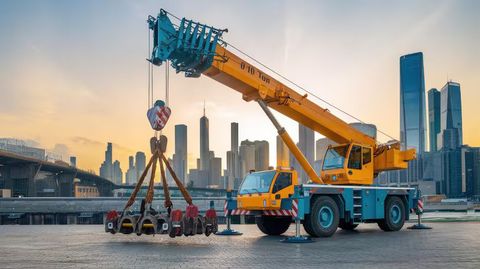
heavy industrial crane rental companies: Explore Crane Types and Uses
Updated: September 19, 2026
Read More
Commercial Property Insurance Quotes: Explore Coverage Choices for Owners
Updated: September 15, 2026
Read More