There are two commonly used categories: air cooled chillers and water cooled chillers. Both types follow the same basic chiller working principle but differ in how they release heat. Air cooled chillers use ambient air, while water cooled chillers rely on water circulation to remove heat. These systems form an essential part of industrial refrigeration systems and broader HVAC chillers used in temperature regulation.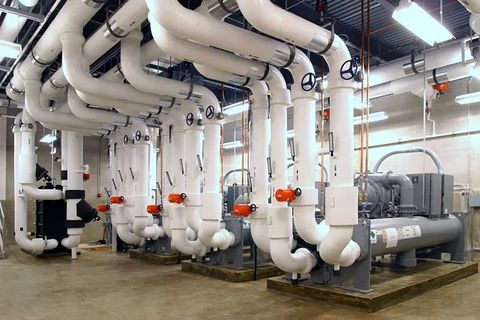
Importance
Industrial chillers are important because they help maintain stable temperatures in environments where overheating can disrupt processes. Many industries rely on consistent cooling to ensure equipment operates correctly and materials are processed under controlled conditions.
Industrial cooling systems are relevant in several areas. Manufacturing units use them to cool machinery, commercial buildings depend on HVAC chillers for climate control, and food processing facilities use them to maintain safe storage conditions.
The importance of cooling equipment can also be seen in everyday infrastructure. Data centers, hospitals, and large buildings require reliable temperature control systems to function properly. Without effective chiller systems, overheating could lead to equipment failure and reduced efficiency.
Types of Chillers
Understanding the types of chillers helps explain how different systems are suited for different environments.
Air Cooled Chillers
Air cooled chillers use fans to dissipate heat into the surrounding air. These systems are typically installed outdoors and do not require additional water systems.
- Simpler installation compared to water-based systems
- Suitable for areas with limited water availability
- Common in medium-scale industrial cooling systems
Water Cooled Chillers
Water cooled chillers use water to transfer heat away from the system. They are usually connected to cooling towers that help release heat.
- More efficient in large-scale operations
- Suitable for continuous industrial use
- Common in industrial refrigeration systems and large facilities
Absorption Chillers
These chillers use heat energy instead of electricity to drive the cooling process.
- Used in specialized industrial applications
- Often integrated into energy recovery systems
Portable and Packaged Chillers
These are compact systems designed for smaller or temporary cooling needs.
- Used in localized industrial cooling systems
- Easy to move and install
Chiller Working Principle
The chiller working principle is based on heat exchange and refrigeration cycles. These systems remove heat from a liquid and transfer it elsewhere.
Basic Process
The operation of chiller systems includes several stages:
- Heat absorption occurs when the refrigerant absorbs heat from the liquid
- Compression increases the pressure and temperature of the refrigerant
- Condensation releases heat into air or water
- Expansion lowers the refrigerant pressure, preparing it for the next cycle
This continuous cycle allows industrial chillers to maintain stable temperatures.
Key Components
Important components in cooling equipment include:
- Compressor that circulates the refrigerant
- Evaporator where heat is absorbed
- Condenser where heat is released
- Expansion valve that controls refrigerant flow
These parts work together to ensure effective cooling in HVAC chillers and industrial refrigeration systems.
Comparison of Air Cooled and Water Cooled Chillers
| Feature | Air Cooled Chillers | Water Cooled Chillers |
|---|---|---|
| Cooling Medium | Air | Water |
| Installation | Simpler | More complex |
| Efficiency | Moderate | Higher in large systems |
| Water Requirement | Not required | Required |
| Typical Application | Medium-scale systems | Large industrial systems |
Applications of Industrial Chillers
Industrial chillers are used across various sectors where temperature control is essential.
Manufacturing
Used to cool machinery and maintain consistent production conditions.
Commercial Buildings
HVAC chillers regulate indoor temperatures in large buildings such as offices and malls.
Food and Beverage Processing
Industrial refrigeration systems help maintain controlled temperatures during processing and storage.
Medical and Data Facilities
Cooling equipment supports sensitive environments where temperature stability is critical.
Recent Updates
Industrial cooling systems have seen several advancements in recent years. One major trend is the focus on energy efficiency. Modern chiller systems are designed to adjust output based on cooling demand, reducing unnecessary energy use.
Another development is the use of environmentally safer refrigerants. Many systems are transitioning toward options that have lower environmental impact.
Digital monitoring is also becoming more common. Smart sensors and control systems allow operators to track performance and detect issues early, improving reliability in industrial refrigeration systems.
Laws or Policies
Industrial chillers are regulated by safety and environmental standards in many countries. These regulations ensure that cooling equipment operates safely and minimizes environmental impact.
Environmental Regulations
Rules often focus on refrigerant usage and emissions. Certain refrigerants are restricted due to their impact on the environment.
Energy Efficiency Standards
Many regions require industrial cooling systems to meet efficiency guidelines to reduce energy consumption.
Safety Compliance
Chiller systems must follow safety standards related to pressure handling, electrical systems, and installation practices.
These policies help ensure responsible use of industrial chillers across different sectors.
Tools and Resources
Various tools support the effective use and understanding of chiller systems.
Performance Monitoring Tools
Digital systems help track temperature, pressure, and energy usage in real time.
Load Calculation Tools
Cooling load calculators estimate the required capacity of industrial chillers for specific applications.
Maintenance Schedules
Structured checklists help ensure regular inspection and proper functioning of cooling equipment.
Technical Documentation
Manuals and guides provide detailed information about types of chillers and their operation.
FAQs
What are industrial chillers and how do they work?
Industrial chillers are systems that remove heat from liquids and transfer it to air or water using a refrigeration cycle.
What is the difference between air cooled chillers and water cooled chillers?
Air cooled chillers use air to release heat, while water cooled chillers use water systems and cooling towers for heat removal.
Where are industrial cooling systems commonly used?
Industrial cooling systems are used in manufacturing, commercial buildings, food processing, and data facilities.
What are common types of chillers?
Common types of chillers include air cooled chillers, water cooled chillers, absorption chillers, and portable systems.
Why are HVAC chillers important in large buildings?
HVAC chillers help maintain indoor temperature and comfort in large buildings by regulating cooling efficiently.
Conclusion
Industrial chillers are essential components of modern cooling systems, supporting a wide range of applications from manufacturing to commercial infrastructure. Air cooled chillers and water cooled chillers differ in design but serve the same purpose of heat removal. Understanding the types of chillers and their working principles helps clarify their role in industrial cooling systems. As technology evolves, these systems continue to improve in efficiency and environmental compatibility.