CNC Machines Discover Modern Manufacturing Processes and Precision Tools
CNC machines have transformed manufacturing by making precision machining faster, more consistent, and highly repeatable. From producing aerospace components to fabricating medical devices and automotive parts, these computer-controlled systems have become an essential part of modern production environments.
Manufacturers increasingly depend on CNC technology to achieve tight tolerances, improve product quality, and streamline complex machining operations. As production demands continue to evolve, CNC machines support greater efficiency while allowing manufacturers to produce intricate components that would be difficult to create manually.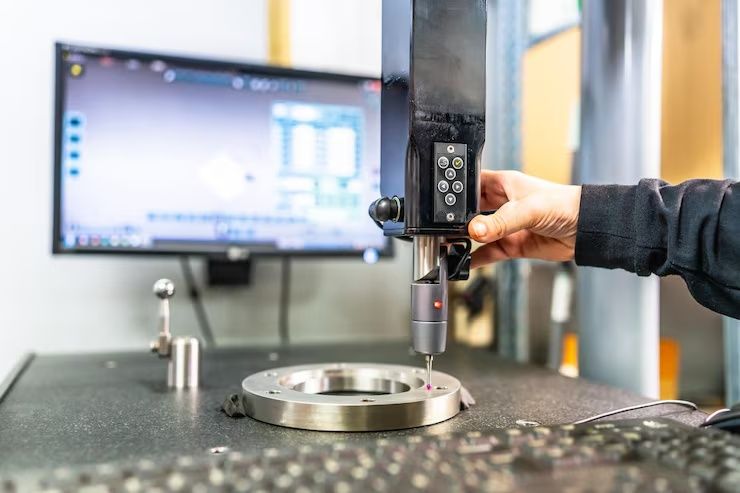
Understanding how CNC machines operate provides valuable insight into today's manufacturing landscape. Their combination of digital programming, precision tooling, and automated motion has reshaped how industries approach machining, product development, and industrial production.
Digital Control at the Core of Precision Manufacturing
Unlike conventional machine tools that rely on continuous manual operation, CNC machines use programmed instructions to control every machining movement. Computer software directs cutting tools along predetermined paths with exceptional accuracy, allowing identical components to be produced repeatedly.
The process begins with a digital part design created using computer-aided design software. That design is converted into machining instructions through computer-aided manufacturing software, generating the toolpaths that guide machine movement.
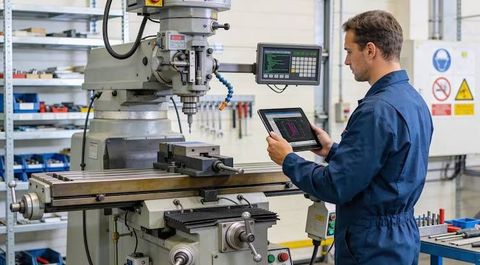
Once the machining program is loaded, the CNC controller coordinates spindle rotation, feed rates, cutting depth, and axis movement simultaneously. This level of automation significantly reduces human variation while improving dimensional consistency.
Main Types of CNC Machines
Modern manufacturing facilities use different CNC machines depending on production requirements and material characteristics.
CNC Milling Machines
CNC milling machines remove material using rotating cutting tools. They are widely used to manufacture complex shapes, precision slots, pockets, contours, and three-dimensional surfaces.
These machines support industries requiring accurate metal and plastic components with excellent surface finishes and tight dimensional tolerances.
CNC Lathes
CNC lathes rotate the workpiece while stationary cutting tools remove material. They are particularly suitable for producing cylindrical parts such as shafts, bushings, threaded components, and precision fittings.
Their ability to perform multiple machining operations during a single setup improves productivity while maintaining high accuracy.
Specialized CNC Equipment
Manufacturing environments also utilize specialized CNC systems, including machining centers, grinding machines, electrical discharge machines, laser cutting systems, plasma cutters, and waterjet machines. Each serves specific production requirements while expanding manufacturing capabilities across different industries.
Essential Components of a CNC Machine
Every CNC machine combines mechanical precision with sophisticated electronic control systems.
Key components include:
- CNC controller
- Machine frame
- Spindle assembly
- Linear guideways
- Ball screws
- Servo motors
- Tool magazine
- Automatic tool changer
- Coolant system
- Workholding devices
These components work together to achieve stable machining conditions while maintaining consistent accuracy throughout production.
Modern Manufacturing Workflow
CNC machining follows a structured production process that begins long before material reaches the machine.
Engineers first create a detailed digital model of the desired component. Manufacturing specialists then generate machining strategies that determine cutting tools, spindle speeds, feed rates, and machining sequences.
After selecting suitable raw material, operators secure the workpiece using fixtures designed to prevent movement during machining. The machine executes the programmed instructions while monitoring tool position and movement with exceptional precision.
Once machining is complete, finished components undergo inspection to verify dimensional accuracy and surface quality before advancing to assembly or additional processing.
Advantages for Industrial Production
CNC technology provides numerous operational advantages that support modern manufacturing objectives.
High machining accuracy reduces variation between components, making CNC systems particularly valuable for industries where precision is essential. Automated production also improves consistency across both small production runs and high-volume manufacturing.
Additional advantages include:
- Repeatable production quality
- Reduced manual intervention
- Faster production cycles
- Complex geometry capability
- Efficient material utilization
- Improved workplace safety
- Flexible production scheduling
- Reliable process documentation
These benefits allow manufacturers to respond more effectively to changing production demands while maintaining consistent product quality.
Tooling Plays a Critical Role
Cutting tools directly influence machining performance, surface finish, and production efficiency.
Manufacturers select tooling based on workpiece material, machining operation, required tolerance, and desired surface quality. Carbide tools are widely used because of their durability and cutting performance, while coated tools improve wear resistance under demanding machining conditions.
Regular tool inspection and replacement help maintain machining accuracy while preventing unexpected interruptions during production.
Proper tool management also contributes to longer machine life by reducing excessive cutting forces and minimizing vibration.
Automation and Smart Manufacturing Integration
Modern CNC machines increasingly operate within connected manufacturing environments.
Production equipment now exchanges operational information with manufacturing execution systems, allowing engineers to monitor machine utilization, production status, maintenance schedules, and machining performance in real time.
Advanced CNC systems also incorporate automatic probing, adaptive machining strategies, and predictive maintenance technologies. These capabilities improve production efficiency while reducing machine downtime.
Integration with industrial communication networks supports coordinated manufacturing across multiple machines, creating flexible production environments capable of handling changing customer requirements.
Quality Assurance Throughout Machining
Precision manufacturing depends on continuous quality verification rather than relying solely on final inspection.
Manufacturers monitor machine calibration, tooling condition, cutting parameters, and environmental conditions to maintain consistent machining accuracy. Coordinate measuring machines and other inspection equipment verify finished dimensions against engineering specifications.
Statistical process monitoring further helps identify process variation before quality issues affect production. This proactive approach supports consistent manufacturing while reducing material waste and rework.
Future Developments in CNC Technology
CNC machining continues advancing through improvements in software, automation, machine design, and digital manufacturing technologies.
Artificial intelligence, machine learning, and digital twins are beginning to support more intelligent machining decisions. Enhanced simulation software allows manufacturers to optimize machining strategies before production begins, reducing setup time and improving efficiency.
Hybrid manufacturing systems that combine additive manufacturing with precision machining are also expanding production possibilities for highly specialized components.
As manufacturing becomes increasingly data-driven, CNC machines will continue serving as a central technology for precision engineering and advanced industrial production.
Conclusion
CNC machines have become fundamental to modern manufacturing by combining digital control, precision engineering, and automated machining into highly efficient production systems. Their ability to produce accurate, repeatable components supports industries ranging from aerospace and medical technology to automotive manufacturing and industrial equipment production.
As manufacturing technologies continue evolving, CNC systems will remain essential for delivering precision, productivity, and flexibility. Continued advances in automation, intelligent software, and connected manufacturing environments ensure that CNC machining will play an increasingly important role in the future of industrial production.

Related Post...
Printed Circuit Board Assembly Plants: Explore the Electronics Manufacturing Process
Updated: October 02, 2026
Read More
Die Casting Manufacturing Equipment: Explore Machines and Production Processes
Updated: October 02, 2026
Read More
CNC Machines Discover Modern Manufacturing Processes and Precision Tools
Updated: July 07, 2026
Read More