Over time, industrial robots have evolved from simple mechanical devices into advanced systems capable of complex movements and decision-making. Today, robot automation systems are widely used in industries such as automotive production, electronics, and packaging. Understanding how industrial robots work helps explain their role in modern factory automation and smart manufacturing environments.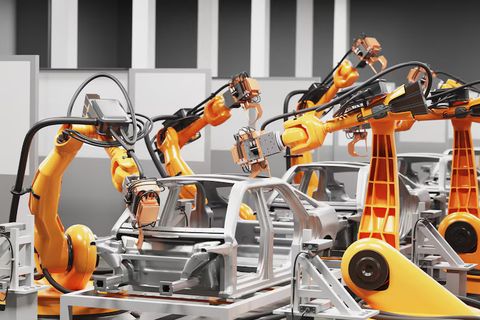
Importance
Industrial robots are important because they help improve productivity and maintain consistency in production processes. In environments where tasks are repetitive or require precision, robotic arms can perform operations more reliably than manual methods.
The relevance of industrial automation extends to several areas of everyday life. Products such as vehicles, electronics, and household items are often manufactured using industrial robot applications. This means that robotics in manufacturing indirectly affects the quality and availability of many commonly used goods.
Industrial robots also help address practical challenges. For example, they can operate in environments that may be difficult or unsafe for humans, such as high-temperature areas or locations involving heavy materials. In addition, factory automation supports continuous production cycles, reducing interruptions and improving overall workflow.
Types of Industrial Robots
There are several types of industrial robots, each designed for specific tasks and environments.
Articulated Robots
Articulated robots have multiple joints that allow flexible movement. These robotic arms are commonly used in welding, painting, and assembly tasks.
Cartesian Robots
Cartesian robots move along straight lines using a three-axis system. They are often used for pick-and-place operations and material handling.
SCARA Robots
SCARA robots are designed for tasks that require high-speed horizontal movement. They are commonly used in electronics assembly and small component handling.
Delta Robots
Delta robots are lightweight and fast, making them suitable for packaging and sorting operations. They are often used in industries that require rapid movement.
Collaborative Robots
Collaborative robots, also known as cobots, are designed to work alongside humans. These robots are part of modern smart manufacturing systems and focus on safe interaction.
How Industrial Robots Work
Understanding how industrial robots work involves looking at their key components and operational processes.
Basic Working Principle
Industrial robots follow programmed instructions to perform tasks. The process generally includes:
- Input stage where instructions are provided through software
- Processing stage where the control system interprets commands
- Output stage where the robot performs physical actions
Key Components
Industrial robots consist of several important elements:
- Controller that manages operations and movement
- Sensors that detect position, motion, and environment
- Actuators that enable movement of robotic arms
- End effectors such as grippers or tools for performing tasks
These components work together to ensure accurate and efficient operation within robot automation systems.
Industrial Robot Applications
Industrial robot applications are found across multiple sectors.
Manufacturing and Assembly
Robotic arms are widely used in assembling parts and products. This is common in automotive and electronics industries.
Material Handling
Robots are used to move, sort, and organize materials within production facilities.
Welding and Painting
Industrial robots perform welding and painting tasks with high precision and consistency.
Packaging and Inspection
Robots are used in packaging systems and quality inspection processes to ensure uniform standards.
Comparison of Industrial Robot Types
| Robot Type | Movement Style | Common Application | Key Feature |
|---|---|---|---|
| Articulated | Multi-joint | Welding, assembly | High flexibility |
| Cartesian | Linear axes | Pick and place | Simple structure |
| SCARA | Horizontal movement | Electronics assembly | Fast and precise |
| Delta | Parallel arms | Packaging | High speed |
| Collaborative | Human interaction | Mixed work environments | Safety-focused design |
Recent Updates
Industrial robots are becoming more advanced with the integration of digital technologies. One major trend is the use of artificial intelligence to improve decision-making and adaptability in robot automation systems.
Smart manufacturing is also evolving with connected systems that allow machines to communicate and share data. This improves efficiency and enables better monitoring of production processes.
Another trend is the increasing use of collaborative robots. These systems are designed to work safely alongside humans, making them suitable for flexible production environments.
Laws or Policies
Industrial robots are governed by safety and operational regulations to ensure proper use in workplaces.
Safety Standards
Robots must meet safety guidelines related to movement, operation, and interaction with humans. These standards help reduce risks in factory automation environments.
Workplace Regulations
Industries using robotics in manufacturing must follow occupational safety rules. This includes training for operators and proper maintenance of equipment.
Compliance Requirements
Robot automation systems may need to comply with technical standards related to design, performance, and environmental impact.
These regulations help ensure that industrial robot applications are used responsibly and safely.
Tools and Resources
Various tools support the understanding and use of industrial robots.
Simulation Software
Simulation platforms allow users to model robotic movements and test processes before implementation.
Programming Interfaces
Software tools help define instructions and control robot behavior in different tasks.
Monitoring Systems
Digital systems track performance, detect issues, and provide insights into robot operations.
Educational Materials
Guides and training resources explain types of industrial robots, their functions, and their applications in manufacturing.
FAQs
What are industrial robots used for?
Industrial robots are used for tasks such as assembly, material handling, welding, painting, and packaging in manufacturing environments.
How industrial robots work in factories?
Industrial robots work by following programmed instructions, using sensors and controllers to perform tasks with precision and consistency.
What are the main types of industrial robots?
The main types of industrial robots include articulated, Cartesian, SCARA, delta, and collaborative robots.
What is the role of robotics in manufacturing?
Robotics in manufacturing helps improve efficiency, accuracy, and consistency in production processes.
What are common industrial robot applications?
Common industrial robot applications include assembly, inspection, packaging, and material handling in factory automation systems.
Conclusion
Industrial robots are a key part of modern industrial automation and manufacturing systems. They perform a wide range of tasks with precision and consistency, supporting efficient production processes. Understanding types of industrial robots and how industrial robots work helps explain their growing role in smart manufacturing. As technology continues to evolve, industrial robot applications are expanding across different industries.