Among the most common solutions are air cooled chillers and water cooled chillers. These systems fall under the broader category of industrial chillers and are based on similar principles but differ in how they release heat. Understanding the chiller working principle helps explain why these two approaches exist and how they are applied in different environments.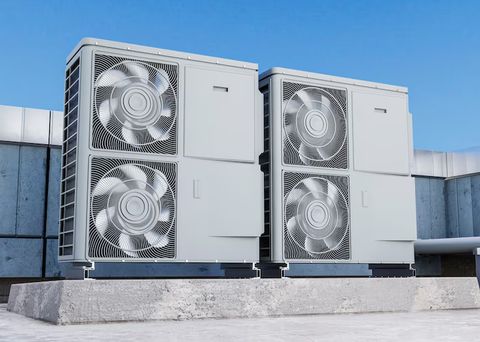
Industrial cooling systems developed as industries required more precise control over temperature-sensitive processes. Over time, advancements in engineering led to the evolution of HVAC chillers and process cooling systems that can handle varying loads and conditions efficiently.
Importance
Industrial cooling systems play a critical role in maintaining operational stability. Many machines generate heat during operation, and without proper cooling, performance can decline or systems may shut down.
These systems are important for several reasons. First, equipment protection helps prevent overheating and extends the lifespan of machinery. Second, process consistency ensures that manufacturing outputs remain uniform, especially in temperature-sensitive industries. Third, energy balance allows systems to operate within controlled limits, reducing unnecessary strain.
Air cooled chillers and water cooled chillers are widely used because they address different environmental and operational needs. For example, some facilities require flexible installations, while others focus on continuous high-capacity cooling. This makes understanding chiller types essential for industrial temperature control.
Types of Industrial Chillers
Industrial chillers are generally categorized based on how they remove heat from the system.
Air Cooled Chillers
Air cooled chillers use ambient air to dissipate heat. They rely on fans to move air across condenser coils, allowing heat to transfer from the refrigerant to the surrounding environment.
These chillers are commonly used in locations where water availability is limited or where simpler installation is required. They are often found in small to medium-sized industrial cooling systems.
Water Cooled Chillers
Water cooled chillers use water as a medium to remove heat. The heat is transferred to water, which is then circulated to a cooling tower or another heat rejection system.
These chillers are typically used in large-scale industrial chillers and process cooling systems. They are suitable for environments where consistent cooling performance is required over long periods.
Chiller Working Principle
The chiller working principle is based on the refrigeration cycle, which involves removing heat from a liquid and transferring it elsewhere.
Basic Process
The process can be understood through key stages:
- Evaporation stage where heat is absorbed from the system
- Compression stage where refrigerant pressure increases
- Condensation stage where heat is released
- Expansion stage where pressure is reduced for the next cycle
This cycle repeats continuously to maintain industrial temperature control.
Heat Transfer Method
The main difference between air cooled chillers and water cooled chillers lies in how heat is rejected. Air cooled systems use air, while water cooled systems rely on water circulation.
Cooling System Comparison
Understanding the differences between chiller types helps clarify their applications.
| Feature | Air Cooled Chillers | Water Cooled Chillers |
|---|---|---|
| Heat Rejection Method | Air | Water |
| Installation Complexity | Relatively simple | More complex |
| Space Requirement | Requires open air space | Requires cooling tower |
| Maintenance Needs | Moderate | Higher due to water systems |
| Application Scale | Small to medium systems | Large industrial systems |
This cooling system comparison highlights how each type fits different operational needs.
Applications of Industrial Cooling Systems
Industrial cooling systems are used across a wide range of sectors.
Manufacturing Processes
Process cooling systems help maintain consistent temperatures during production. This is important in industries such as plastics, chemicals, and electronics.
Commercial Buildings
HVAC chillers are used in large buildings to regulate indoor temperatures. They support comfort and system efficiency.
Energy and Power Systems
Cooling systems are essential for managing heat in power plants and energy facilities. They help ensure stable operation.
Food and Beverage Processing
Temperature control is necessary for maintaining product quality and safety during processing and storage.
Recent Updates
Industrial cooling systems are evolving with advancements in efficiency and automation. Many modern industrial chillers now include smart monitoring systems that track performance and adjust operations in real time.
Energy efficiency is a major focus area. New designs aim to reduce power consumption while maintaining consistent output. Variable-speed technology is increasingly used in both air cooled chillers and water cooled chillers.
Sustainability is another ongoing trend. Efforts are being made to reduce environmental impact through improved refrigerants and water management practices. These changes are shaping the future of industrial temperature control.
Laws or Policies
Industrial cooling systems are regulated to ensure safety, efficiency, and environmental responsibility.
Environmental Regulations
Cooling systems must comply with rules related to emissions and refrigerant usage. These regulations aim to reduce environmental impact.
Energy Efficiency Standards
Many regions have guidelines that require industrial chillers to meet minimum efficiency levels. This helps reduce energy consumption.
Water Usage Guidelines
Water cooled chillers are subject to regulations regarding water use and discharge. Proper management is required to prevent waste and contamination.
These policies influence how cooling systems are designed and operated.
Tools and Resources
Several tools and resources support the operation and understanding of industrial cooling systems.
Monitoring Systems
Digital monitoring tools track temperature, pressure, and system performance. These systems help maintain efficiency.
Calculation Tools
Load calculation tools estimate cooling requirements based on system size and usage.
Maintenance Planning Tools
Maintenance schedules and checklists help ensure consistent operation and prevent system issues.
Technical Documentation
Guides and manuals provide detailed explanations of chiller types and system design.
These resources support effective management of industrial chillers.
FAQs
What are industrial cooling systems?
Industrial cooling systems are systems designed to remove heat from machinery or processes to maintain stable operating conditions.
What is the difference between air cooled chillers and water cooled chillers?
Air cooled chillers use air to remove heat, while water cooled chillers use water and often require additional systems such as cooling towers.
How does the chiller working principle function?
The chiller working principle is based on a refrigeration cycle that absorbs heat, compresses refrigerant, releases heat, and repeats the process continuously.
Where are industrial chillers commonly used?
Industrial chillers are used in manufacturing, commercial buildings, energy systems, and food processing environments.
Why is cooling system comparison important?
Cooling system comparison helps determine which type of chiller is suitable based on space, scale, and operational requirements.
Conclusion
Industrial cooling systems are essential for maintaining temperature control in various applications. Air cooled chillers and water cooled chillers represent two primary approaches, each suited to different environments. Understanding the chiller working principle and system differences helps clarify their roles in industrial operations. As technology advances, these systems continue to improve in efficiency and adaptability.