HTTP vs HTTPS: Discover How Secure Web Connections Work
A website connection can look simple in a browser, but several security mechanisms operate behind the scenes whenever information moves between a device and a web server.
The difference between HTTP and HTTPS determines whether that communication is sent through an unencrypted connection or protected using modern cryptographic protocols.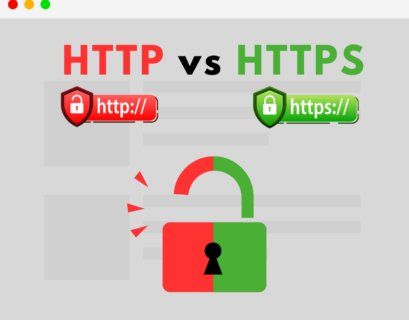
HTTP was designed primarily to transfer web resources between clients and servers. HTTPS adds a security layer through Transport Layer Security, commonly called TLS, helping protect information from interception, unauthorized modification, and impersonation while it travels across a network.
Understanding HTTP vs HTTPS is useful for anyone working with websites, online accounts, web applications, or network security. The distinction explains why browsers display security indicators, how certificates establish server identity, and why encrypted connections have become the standard for modern websites.
The Fundamental Difference Between HTTP and HTTPS
HTTP, or Hypertext Transfer Protocol, defines how a web browser and server communicate. When a browser requests a webpage, HTTP specifies how that request and the server's response are structured and exchanged.
The major limitation is that traditional HTTP does not provide encryption for the information being transmitted. Data moving through an HTTP connection can potentially be observed or modified by an attacker who has an appropriate position on the network.
HTTPS, or Hypertext Transfer Protocol Secure, uses HTTP together with TLS. TLS provides cryptographic protection for the connection, creating a secure channel between the browser and the server.
The distinction can therefore be summarized simply:
| Characteristic | HTTP | HTTPS |
|---|---|---|
| Web protocol | HTTP | HTTP over TLS |
| Encryption | Not provided by HTTP itself | Provided through TLS |
| Server authentication | No certificate-based authentication | Uses digital certificates |
| Data integrity | Not cryptographically protected | Cryptographically protected |
| Typical use | Legacy or controlled environments | Modern public websites and applications |
HTTPS does not create a different kind of webpage. It protects the communication used to access that webpage.
How HTTPS Protects Web Communication
HTTPS relies on several security properties working together rather than on encryption alone.
Encryption
Encryption transforms readable information into data that cannot be practically understood without the appropriate cryptographic keys. If someone intercepts encrypted traffic, the captured data should not reveal the protected contents of the communication.
This matters when a browser sends sensitive information such as account credentials, authentication tokens, personal information, or application data.
Authentication
HTTPS also helps a browser determine whether it is communicating with the intended website. This process relies on digital certificates issued through the public key infrastructure used by the web.
A certificate binds a domain name to a public key and contains information that can be validated through a trusted certificate authority. Browsers use this information when establishing a secure connection.
Authentication does not mean that a website itself is trustworthy in every respect. It primarily helps establish that the connection is associated with the domain represented by the certificate.
Data Integrity
HTTPS also protects against undetected modification of transmitted data. Cryptographic mechanisms allow the communicating parties to detect whether protected information has been altered during transmission.
This is particularly important for web applications because an attacker who can modify network traffic could otherwise attempt to change content, inject malicious code, or manipulate requests.
What Happens When a Browser Connects Using HTTPS?
An HTTPS connection involves a negotiation between the browser and server before protected application data is exchanged.
The process is commonly associated with the TLS handshake. The browser and server establish which cryptographic parameters they will use and exchange information needed to create shared session keys.
The server also presents its digital certificate. The browser checks whether the certificate is valid for the requested domain and whether its trust chain can be verified.
After the secure session has been established, HTTP messages can travel through the encrypted TLS connection. The user generally does not see these individual cryptographic operations because modern browsers perform them automatically.
This process is one reason HTTPS should not be thought of simply as "HTTP with a lock icon." It involves authentication, key establishment, encryption, and integrity protection working together.
Why Digital Certificates Matter
Digital certificates are a central part of HTTPS authentication. They provide browsers with cryptographic information that helps establish the identity of the server they are connecting to.
Certificates have an expiration period and are issued under defined validation procedures. Depending on the certificate type, validation can involve different levels of checks related to domain control and organizational identity.
Modern browsers automatically evaluate certificates during connection establishment. Problems such as an expired certificate, an invalid domain name, or an untrusted certificate chain can cause security warnings.
Certificate validation is therefore an important part of maintaining an HTTPS-enabled website. Encryption alone would not provide the same protection if users had no mechanism for determining which server controlled the connection.
What HTTP Cannot Protect
HTTP's lack of encryption creates several weaknesses when used across untrusted networks.
For example, information transmitted through an unsecured HTTP connection could potentially be observed by someone monitoring network traffic. Depending on the circumstances, an attacker may also attempt to modify communication between the browser and server.
This can create risks such as:
- Exposure of information transmitted through the connection
- Manipulation of web content during transmission
- Interception of session-related information
- Greater opportunity for network-level attacks
The exact risk depends on the network, application design, information being transmitted, and attacker's capabilities. HTTP is not automatically dangerous in every controlled environment, but it lacks the protections expected for modern public web communication.
HTTPS and Modern Web Applications
HTTPS has become especially important as websites have evolved from static pages into interactive applications.
Modern web applications commonly handle authentication, personalized content, application programming interfaces, payment-related workflows, cloud resources, and other data exchanges. Protecting these communications requires more than simply delivering webpage text.
HTTPS also provides the foundation for many modern browser capabilities that require a secure context. Web platforms increasingly use secure connections as a prerequisite for sensitive APIs and browser features.
This means HTTPS is not merely a security enhancement added to an otherwise unchanged website. It is increasingly part of the technical foundation on which modern web applications operate.
HTTPS, HTTP/2, and HTTP/3
Another useful distinction is between the application protocol and the security layer.
HTTP/2 and HTTP/3 are newer versions of HTTP designed to improve how web communication is transported and managed. HTTPS can be used with these modern HTTP versions, although their underlying transport mechanisms differ.
HTTP/2 commonly operates over TLS using TCP, while HTTP/3 uses QUIC, which is built over UDP and incorporates TLS 1.3 as part of its connection establishment.
The important point for general users is that HTTPS and newer HTTP versions address different aspects of web communication. HTTPS primarily provides security, while HTTP/2 and HTTP/3 introduce improvements to protocol performance and transport behavior.
Does HTTPS Make a Website Completely Secure?
No. HTTPS protects the connection between the browser and the server, but it does not guarantee that the website itself is free from vulnerabilities, malicious content, poor configuration, or deceptive behavior.
A website can use valid HTTPS while still containing insecure application code or compromised systems. HTTPS also cannot prevent a user from intentionally submitting information to a fraudulent website that has obtained a valid certificate for its own domain.
Website security therefore involves multiple layers, including secure application development, authentication controls, access management, server protection, vulnerability management, monitoring, and appropriate data handling.
HTTPS should be viewed as a fundamental communication-security mechanism rather than a complete security program.
How Browsers Signal Secure Connections
Modern browsers provide visual and technical indicators when a website uses HTTPS. Depending on the browser and current interface, users may see a security indicator near the address field.
These indicators communicate information about the connection and certificate status. They should not be interpreted as a guarantee that every aspect of the website is safe.
If a browser displays a certificate warning, users should pay attention to it rather than automatically bypassing the warning. Such messages can indicate problems with certificate validity, domain matching, trust, or connection configuration.
Why HTTPS Has Become the Standard
The transition from HTTP to HTTPS reflects a broader change in how web security is approached. Web communication increasingly involves sensitive information, authenticated sessions, application functionality, and interactions with external services.
HTTPS provides three foundational protections: confidentiality through encryption, authentication through certificates, and integrity through cryptographic verification.
For website operators, HTTPS also supports compatibility with modern browser features and current web-development practices. For users, it provides an important layer of protection whenever information travels between a browser and a web server.
Frequently Asked Questions
Is HTTPS simply encrypted HTTP?
HTTPS uses HTTP over a TLS-protected connection. TLS provides encryption along with authentication and integrity protections, so HTTPS is more accurately understood as HTTP operating through a secure cryptographic channel.
Can someone still see that I am visiting an HTTPS website?
HTTPS encrypts the contents of the web communication, but it does not make every aspect of network activity invisible. Depending on the network configuration and technologies involved, certain connection metadata may still be observable.
Does HTTPS protect passwords?
HTTPS protects passwords while they are transmitted between the browser and server. However, the website must also store and process credentials securely. Transport encryption alone does not protect against weaknesses in the application's authentication system.
Is HTTP still used?
Yes. HTTP can still exist in private networks, testing environments, legacy systems, or situations where encryption is provided through another controlled mechanism. For public websites handling normal user traffic, HTTPS is the established approach.
Does HTTPS guarantee that a website is legitimate?
No. HTTPS helps authenticate the domain associated with the connection, but it does not establish that the website's content, organization, or intentions are trustworthy.
Conclusion
HTTP and HTTPS use the same fundamental web communication model, but HTTPS adds TLS-based protection that changes how safely information can travel between a browser and server. Encryption protects confidentiality, certificates support authentication, and cryptographic integrity checks help detect unauthorized modification.
For modern web communication, HTTPS is an essential security foundation rather than an optional visual feature. Understanding the difference between HTTP and HTTPS also makes it easier to interpret browser security indicators and recognize the limits of connection-level protection.

Related Post...

Virtual Data Rooms for M&A: Explore Secure Deal Documentation Processes
Updated: September 15, 2026
Read More
Turnkey PCB Assembly Guide to Components, Testing, and Production Steps
Updated: September 15, 2026
Read More
AI-Powered Business Phone System: Explore How Intelligent Calling Works
Updated: September 24, 2026
Read More